
I can’t remember the last time I didn’t have homemade harissa paste on hand. I make a big batch once or twice every month. Harissa is originally from North Africa, namely Tunisia. It’s a rich, smoky chilli paste that has travelled the world thanks to its versatility and unforgettable taste.
This paste is far more than just “spicy.” Oh no! It’s a careful balance of heat, smokiness, and savoury depth, with notes of garlic, warm spices, and sometimes, as in this recipe, even citrus. Once you make it at home, you’ll understand why I love it so much. It's delicious on this harissa chicken!

What Is Harissa Paste?
Harissa is a chilli-based paste that originated in Tunisia but is also popular across Morocco, Algeria, and other North African cuisines. For that matter, it is now very popular in southern Europe and worldwide.
Traditionally, it’s made by pounding dried red chillies, garlic, cumin, coriander, caraway, and olive oil into a thick paste.
The result is a deeply spiced, smoky, savoury condiment that can be used in countless ways: stirred into soups, rubbed onto meats, whisked into dressings, or even dolloped on eggs for breakfast.
Depending on the region (and the cook), harissa can vary in heat, consistency, and added ingredients. Some versions are fiery and oily, others mild and fragrant, with additions like roasted peppers, preserved lemon, or mint.
Ingredients
Fresh and top quality ingredients are key to getting the best flavour from this harissa paste recipe. You’ll find the ingredients listed below, while the precise amounts are provided in the recipe card at the end of the page. It’s a good idea to have everything measured and prepared before you begin.

See recipe card for quantities.
Following are links to the ingredients I use. I am an amazon affiliate and will make a few pennies if you click on an ingredient and purchase it.
- Dried dried chillies
- Kashmiri Chillies
- Cumin seeds
- Coriander seeds
- Caraway seeds
- Garlic
- Smoked paprika
- Salt
- Lemon juice
- Distilled white vinegar
- Red pepper paste
- Tomato paste/puree
- Olive oil
Step by step photos
Below, you’ll see step-by-step photographs to guide you through the recipe. At the bottom of the page, you’ll also find the full recipe card, which includes the complete list of ingredients and written instructions in an easy, printable format.
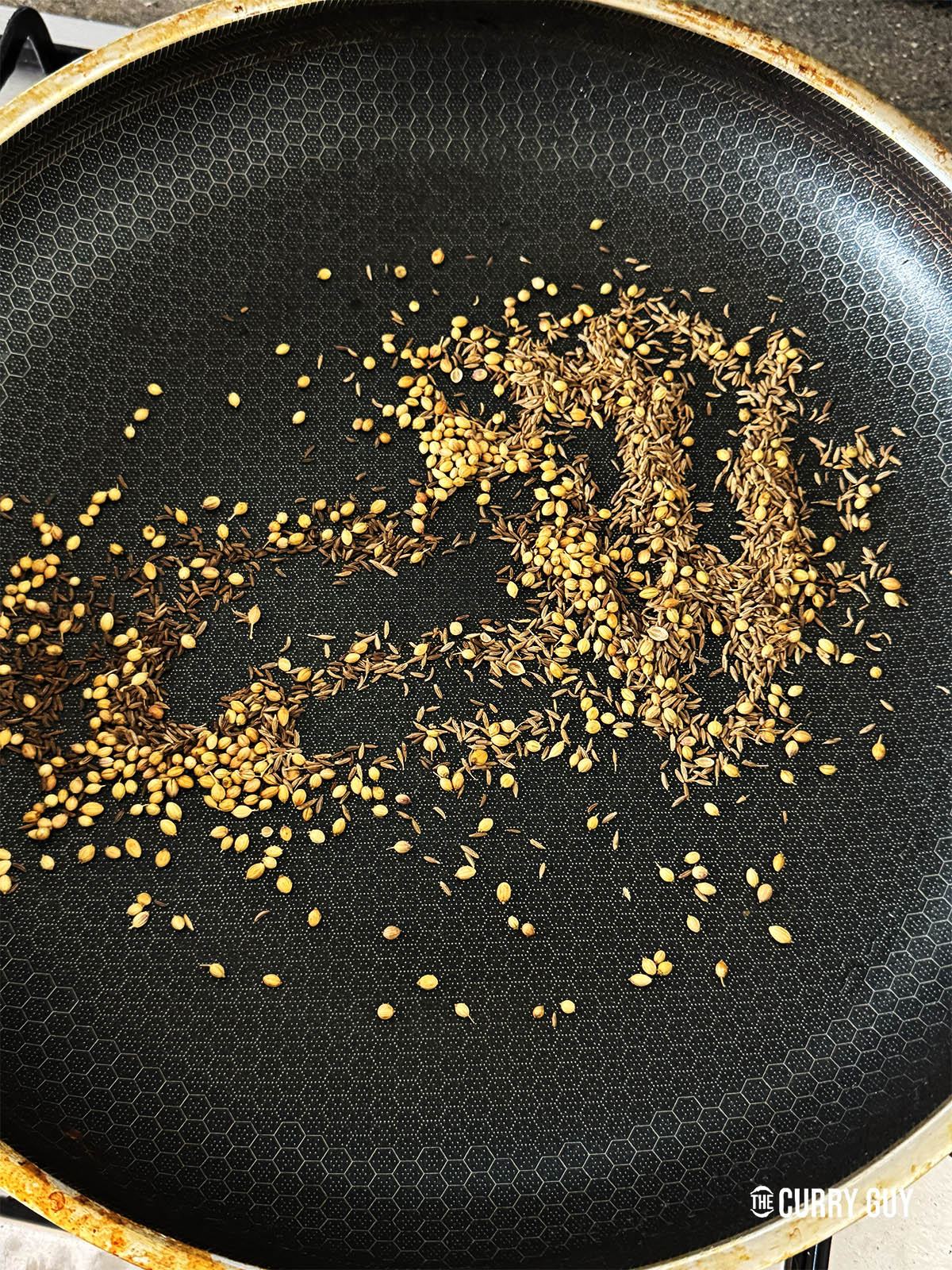
- Step 1: Toast the cumin seeds, coriander seeds and caraway over a medium heat until warm to the touch and fragrant.

- Step 2: Using a spice grinder or pestle and mortar, grind the toasted whole spices to a course or find powder. Set aside.

- Step 3: Heat a pan over a medium-high heat. Add the chillies and dry fry them, stirring regularly for a couple of minutes or until warm to the touch and fragrant. Be careful not to burn them.

- Step 4: Add water to the pan and bring to a simmer. Then take off the heat and allow to soak for about 20 minutes.

- Step 5: Now place all of the ingredients except for the soaking chillies in a blender and blend until you have a smooth paste.

- Step 6: Strain the chillies, retaining some of the water and add the chillies to the blender.

- Step 7: Blend it all until smooth. You can add a little of the retained soaking water if needed to assist blending but only enough to help blend. Harissa is a thick paste.

- Step 8: Try some and adjust the seasoning if necessary. You can pass it through a fine sieve if you like but I rarely do.
How do you use harissa?
Harissa is one of the most versatile condiments around. There really is so much you can do with it which is why I really hope you make this harissa recipe. Here are a few ways you can use it...
- As a marinade for chicken, lamb, or fish
- Stirred into soups, stews, or tagines
- Mixed into hummus or yogurt for a dip
- Spread onto sandwiches or wraps
- Swirled through couscous or grains
- Tossed with roasted vegetables
- Dolloped on eggs or avocado toast
Variations Across Regions
This harissa recipe is similar to what you will find in Tunisia and Tunisian cuisine. It can be added to stews or used as a condiment.
- Tunisian Harissa: Fiery, with more chillies and garlic.
- Moroccan Harissa: Often includes roasted peppers and preserved lemon.
- Algerian Harissa: Can be thicker and used more as a cooking ingredient than a condiment.
- Other: Harissa is popular worldwide and can be added to any recipe where a bit of spice is desired.
Which chillies are best for harissa?
That will really depend on where you live and how spicy your want your harissa paste to be. I prefer to use the mild dried guindilla and/or guajillo chillies that give the harissa paste depth without blowing your head off. Kashmiri chillies are also a good bet.
I do like a spicy harissa though so other, spicier dried chillies can be added to taste. There is no wrong or right answer. If you like the chilli and the heat it produces, add some.
Useful Equipment
You don’t need much fancy equipment, but a few tools make things easier:
Fine sieve – if you want an ultra-smooth paste
Blender or food processor – for a smooth paste
Mortar and pestle – for a more traditional, rustic version
Tongs – for handling roasted peppers or chillies
Sharp knife and chopping board
Jar with lid – for storage
Serving Size (Serves 10)
This recipe will serve approximately 10 but it's a bit difficult to say. The reason is that it's so versatile. You could stir a tablespoon into yoghurt or use half of it in a fiery hot stew. It's simply a great spicy paste to have on hand.
How to Store Harissa Paste
Fridge: Store in a sterilised jar, topped with a layer of olive oil, for up to 3–4 weeks. Always use a clean spoon to scoop it out.
Freezer: Spoon harissa into ice cube trays, freeze, then transfer to a bag or container. Use cubes as needed (lasts 3 months).
Pantry (short-term): If you plan to use within a week, it’s fine to keep at room temperature in a sealed jar topped with oil
Pro Tips for Perfect Harissa
- Balance the flavours – harissa isn’t just about heat. Make sure there’s acidity (lemon or vinegar), sweetness (peppers or tomato paste), and smokiness (roasted chillies or paprika).
- Toast your spices – don’t skip this step; it makes a world of difference.
- Choose your chillies wisely – milder ones (like guajillo) create a complex flavour without blowing your head off. Add a few hot chillies if you like it fiery.
- Rest before using – let the harissa sit for at least a day before using. The flavours develop beautifully.
- Control the consistency – thicker harissa works well as a rub, while a looser paste (add more oil) is better for sauces and dressings.
Top Tip
Always cover with oil – topping your jar with olive oil prevents mould and keeps it fresher for longer.
FAQ
That depends on the chillies you use. You can make it mild and smoky or fiery hot.
Yes, but homemade harissa is fresher, more flavourful and customisable. Store-bought versions often lack depth and can be overly spicy and salty.
Yes. Harissa is often used as a marinade. It's is a delicious marinade for chicken, beef, lamb, seafood and vegetables. As there is lemon juice in harissa, only marinate meat and seafood for up to 4 hours.
Related
Looking for other recipes like this? Try these:


Have you tried this harissa paste recipe?
If yes, please give it a star rating in the recipe card below and leave a comment. I love receiving your feedback and I’m sure other readers of my blog do too. Thank you.
If you are not already doing so, please follow The Curry Guy on Instagram and Facebook for all our latest recipes.
Harissa Paste
Ingredients
- 12 dried large dried chillies
- 10 dried Kashmiri Chillies
- 1 generous tbsp cumin seeds
- 1 generous tbsp coriander seeds
- 1 ½ tsp caraway seeds
- 10 cloves garlic, minced
- 2 tsp smoked paprika
- 1 ½ tsp sea salt
- 3 tbsp lemon juice
- 1 tbsp white wine vinegar or distilled white vinegar
- 2 tbsp red pepper paste
- 1 tbsp tomato paste
- 70ml (1/4 cup) olive oil
Instructions
- Toast the cumin seeds, coriander seeds and caraway over a medium heat until warm to the touch and fragrant.
- Using a spice grinder or pestle and mortar, grind the toasted whole spices to a course or find powder. Set aside.
- Heat a pan over a medium-high heat. Add the chillies and dry fry them, stirring regularly for a couple of minutes or until warm to the touch and fragrant. Be careful not to burn them.
- Add water to the pan and bring to a simmer. Then take off the heat and allow to soak for about 20 minutes.
- Now place all of the ingredients except for the soaking chillies in a blender and blend until you have a smooth paste.
- Strain the chillies, retaining some of the water and add the chillies to the blender.
- Blend it all until smooth. You can add a little of the retained soaking water if needed to assist blending but only enough to help blend. Harissa is a thick paste.
- Check for seasoning and add more salt if necessary. The harissa will keep in your fridge for about a week.
Recommended Products
As an Amazon Associate and member of other affiliate programs, I earn from qualifying purchases.


Nutrition Information:
Yield:
12Serving Size:
1Amount Per Serving: Calories: 37Total Fat: 2gSaturated Fat: 0gTrans Fat: 0gUnsaturated Fat: 1gCholesterol: 0mgSodium: 297mgCarbohydrates: 6gFiber: 1gSugar: 2gProtein: 1g


Leave a Reply