
When you think of Indian food, chances are curry, naan and tandoori dishes come to mind first. But if you’ve ever eaten in a proper Indian restaurant or dhaba (roadside eatery) in India or an authentic Indian restaurant in the west that still uses a charcoal burning tandoor oven, you’ll know that Tandoori Roti is every bit as good and popular.
In this post I will tell you everything you need to know to get tandoor roti just right!

What is Tandoori Roti?
Good question as they do look a lot like chapatis, don't they! Tandoori roti are made with the same ingredients as chapatis.
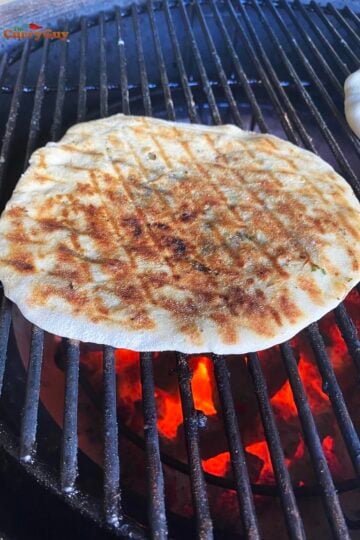
Instead of being cooked in a pan or tawa, tandoori roti are cooked in a tandoor oven. Traditionally, tandoori roti are cooked in a clay tandoor but today I cooked mine in my Doori tandoor using their new naan pan.
The magic of tandoori roti lies in how it cooks: the intense heat of the tandoor (often over 450°C / 850°F) gives it a smoky flavour, crisp edges, and soft chew. You’ll often see little charred blisters, which are the hallmark of a proper tandoori bake.
It’s the perfect partner to curries, kebabs, and dals as it's strong enough to scoop up whatever it is you happen to be eating.
Ingredients
You don't need a lot of ingredients to make tandoori roti. In fact, the ingredients you need are the same as chapatis. Get everything measured out and ready before you start.
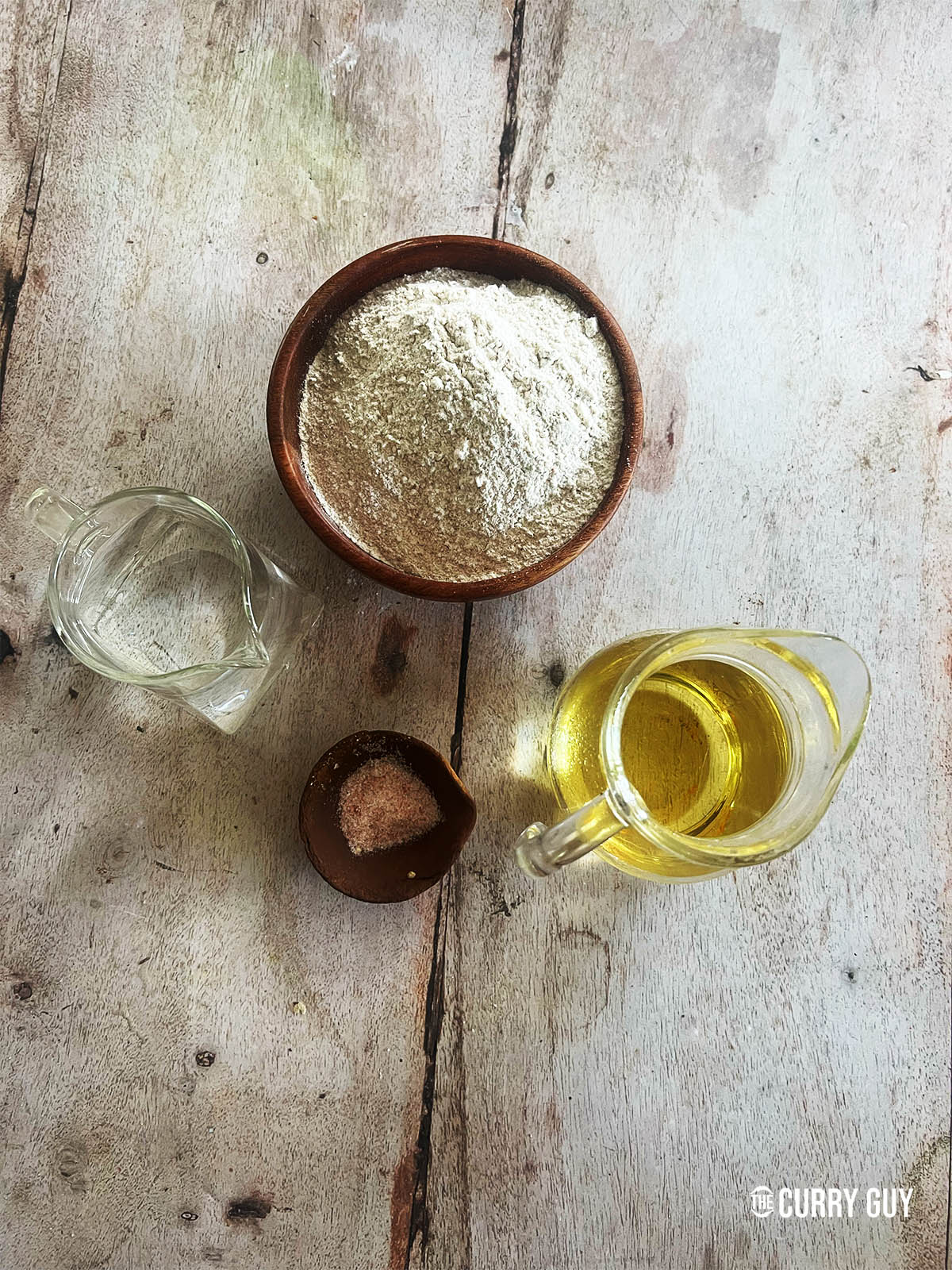
See recipe card for quantities.
- Chapati flour
- Warm water
- Salt
- Rapeseed (canola) oil
- Ghee (optional)
See recipe card for quantities.
Instructions
Below, you’ll see step-by-step photographs to guide you through the recipe. At the bottom of the page, you’ll also find the full recipe card, which includes the complete list of ingredients and written instructions in an easy, printable format.

- Step 1: Sift the flour and salt into a mixing bowl.

- Step 2: Slowly begin to add water. I only use about 180ml (3/4 cup) but flours do vary. In should look quite crumbly at first.

- Step 3: Knead it all into a soft dough ball for about 3 minutes. Wet your hands with the oil and continue kneading for a further 2 minutes.

- Step 4: Cover and allow to rest for about 30 minutes or longer.

- Step 5: Roll the dough into a rope and divide into about 8 pieces of equal size.

- Step 6: Then form the pieces into smaller balls.
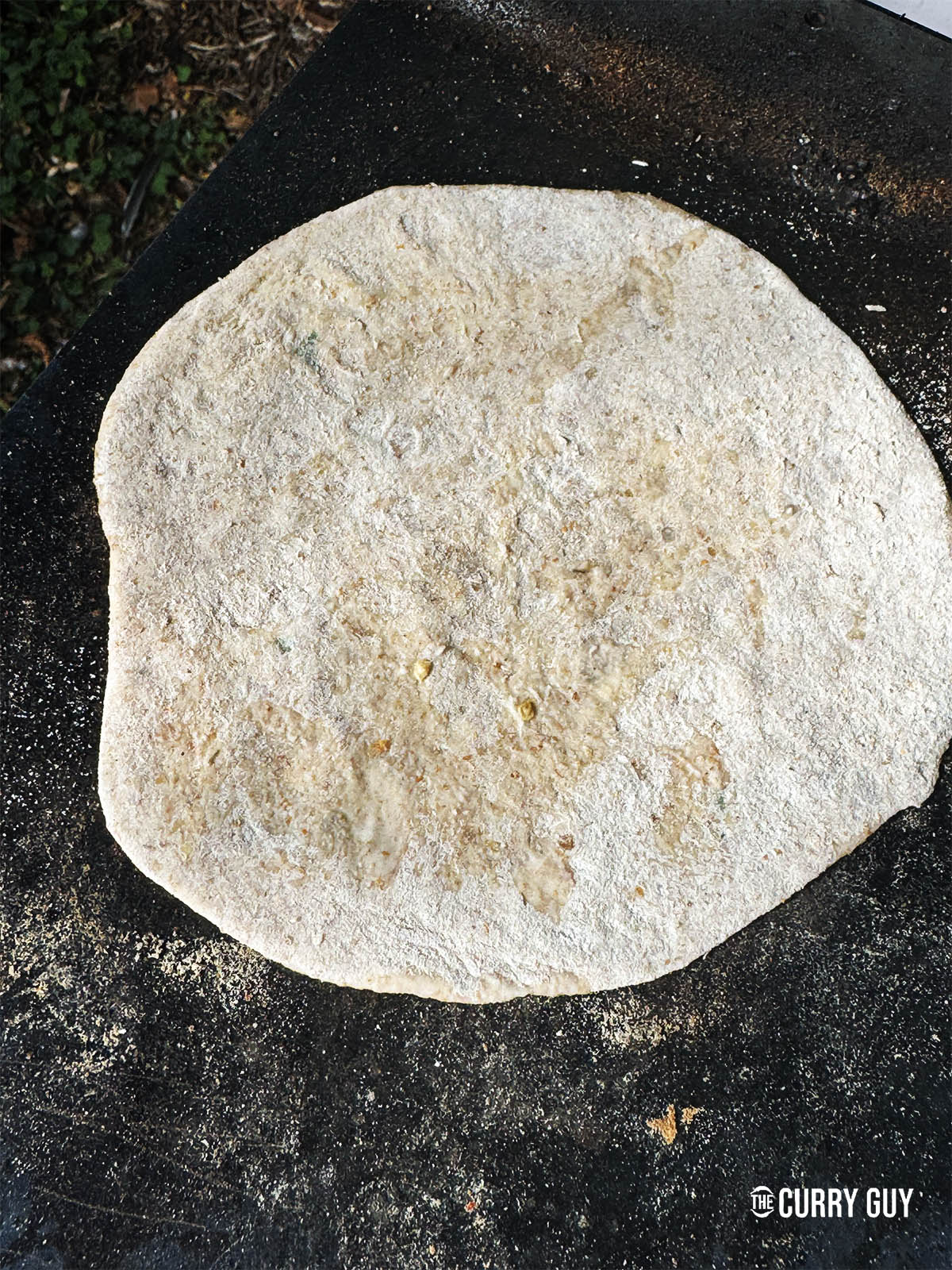
- Step 7: Dust with flour and roll into circles, about 6–7 inches across. They should be slightly thicker than chapatis but not as thick as naan.

- Step 8: Wet the underside of your roti. Slap it onto the wall of your tandoor oven or on to the naan pan of your Doori.

- Step 9: Cook for about 2 minutes. This roti will brown in places and become crispy in places too.

- Step 10: Transfer the cooked rotis to a clean surface and brush with ghee if you like. Keep warm while you cook the remaining rotis.
Variations
There are many ways to personalise your tandoori roti to taste and lifestyle. Here are a few:
- Chapatis: Chapatis are really just tandoori rotis that are cooked on a tawa or pan instead of in a tandoor. Chapatis are tolled a bit thinner than tandoori rotis, like tortillas.
- Flavoured: If it sounds good, add it to the dough. You could add different spices, herbs and other greens to your tandoori roti.
Useful Equipment for Making Tandoori Roti
You might not own a clay tandoor, but that doesn’t mean you can’t make tandoori roti at home. Here are the tools you can use:
Traditional Clay Tandoor :
I have made countless tandoor roti in my clay tandoor ovens. If you have one, give this recipe a try.
Doori Tandoor :
These are modern, portable, metal tandoors designed for home use. I have been using one for the past year and love my Doori! As it's portable, I even took mine camping and to Spain on holiday. Doori recently brought out a naan pan so that you can cook tandoor roti and other flat breads in the Doori.
Cast Iron Skillet or Tava:
The most accessible option. A heavy cast-iron skillet gets blisteringly hot and mimics the effect of a tandoor. Use this method and you wont have a tandoori roti but rather a chapati but the cooking method works well. Here's my chapati recipe.
Oven with Pizza Stone or Baking Steel:
Preheat your oven (and stone/steel) to its highest setting and place your pizza stone or baking steel in it to heat for at least 30 minutes. Place your rotis on top to cook. TYou won't get the same smoky flavour as cooking with charcoal but you will still get good results.
Serving Size 4 to 6
This recipe is written for 4 to 6 servings, perfect for feeding a family or making sure there are leftovers ready for later. If you only need tandoor roti to serve 1 or 2 people, you can halve the recipe or freeze the dough balls.
They freeze really well, wrapped tightly. Then just remove from the freezer whenever you like, let them defrost and cook them up.
Note: Nutritional information provided in the recipe card below is a rough guide only. Values can vary depending on the exact ingredients and quantities you use.
Storage and Reheating Tandoori Roti
Like most flatbreads, tandoori roti is best fresh. But you can store and reheat it if needed:
Refrigeration: Wrap in foil or place in an airtight container for up to 2 days.
Freezing: Stack rotis with parchment between each and freeze in a zip-top bag for up to 2 months.
Reheating: Warm on a hot skillet for 30–60 seconds or reheat in the oven wrapped in foil. Avoid microwaving as it can make them rubbery. I often warm tortillas and chapatis in a microwave but tandoori rotis are best reheated in other way.
Pro Tips
- High Heat is Key:
Whether you’re using a tandoor, skillet, or oven, the surface must be very hot before you cook the roti. - Slightly Thick Dough:
Don’t roll the rotis too thin; they should be a bit thicker than chapati to withstand the heat and puff nicely. - Rest the Dough:
Resting the dough helps relax the gluten, making the rotis softer and easier to roll. - Don’t Over-flour While Rolling:
Too much dusting flour burns easily on high heat and can make the rotis dry. - Use Whole Wheat Flour:
Authentic tandoori roti is made with atta, which gives it its nutty flavour. Don’t substitute with all-purpose flour.
Top Tip
Serve Immediately: Like naan, tandoori roti loses its appeal as it cools. Have your curries or wrap fillings ready so you can serve your rotis piping hot.
FAQ
Naan is made with white flour and often includes yeast or yoghurt, making it softer and richer. Tandoori roti is made with whole wheat flour and has a more rustic, earthy taste.
The main difference is how they are cooked. Chapatis are usually cooked on a tawa or pan. Tandoori roti are cooked in a very hot tandoor oven. Because of this, tandoori roti are usually slightly thicker that chapatis so that they don't burn during the cooking process. The ingredients you use to make both are the same.
Yes! I will be doing exactly that over the next few weeks to show you other options.
Yes, it’s lighter and higher in fibre than naan since it’s made from whole wheat flour. Pair it with vegetables or dal for a delicious and healthy meal.
Related
Looking for other recipes like this? Try these:


Pairing
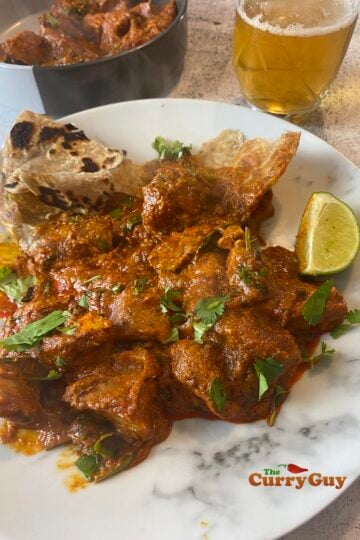
Tandoori rotis are great served with curries or tandoori kebabs. Try one or all of these!






Final Thoughts
Tandoori roti is proof that sometimes the simplest things are the most satisfying. With just flour, water, and heat, you get a bread that’s nutty, smoky, and perfect for mopping up curries.
While cooking in a tandoor is authentic and my preferred method of cooking tandoori roti, you could use this recipe and cook the roti in a pan or on a tawa like a chapati.
Once you try making your own tandoori roti, I think you'll want to do it often.
Have you tried this tandoori roti recipe?
If yes, please give it a star rating in the recipe card below and leave a comment. I love receiving your feedback and I’m sure other readers of my blog do too. Thank you.
If you are not already doing so, please follow The Curry Guy on Instagram and Facebook for all our latest recipes.
Tandoori Roti
Ingredients
- 500g (2 cups) chapati flour
- 190ml - 250ml (3/4 to 1 cup) warm water
- 1 tsp salt
- 1 tsp rapeseed (canola) oil
- Ghee (optional)
Instructions
- Sift the flour, salt into a bowl and then add the water a little at a time. Stir with a wooden spoon or your hands until you have a soft dough.
- Knead the dough for about three minutes and then wet your hands with the oil and continue kneading for another 2 minutes.
- Go ahead and knead the dough for as long as you like. It can't hurt and will improve. Form into a dough ball and set aside covered to rest for about 30 minutes.
- Dust the work surface with a little flour and divide your dough into about eight to ten smaller balls.
- Flatten each ball between your hands and then flatten them more with a rolling pin until they are about six inches in diameter and 3mm thick. Try to keep the roti as round as possible by rolling from different angles. Dust off any excess flour.
- If you have a tandoor oven, you'll know what to do. If you have a Doori, just heat the naan paddle until flaming hot in the Doori. When hot, wet the bottom side and slap it on the naan pan.
- Cook until bubbles begin to form. Keep an eye on it all You will know them you tandoori roti is ready as it will literally slide off the paddle.
If you are interested in picking up a new Doori, use the promo code THECURRYGUY when checking out and you will receive a 10% DISCOUNT and a free tandoor cover. NOTE: The Free Weather Cover will not appear on your order but you will receive it when you use the promo code THECURRYGUY.


Leave a Reply