
Few dishes capture the essence of Parsi cooking as beautifully as lamb dhansak. Or so I've been told by quite a few blogger friends in Mumbai. After trying it on an evening out, I was pretty much sure they knew what they were talking about.
Mutton or lamb dhansak is a hearty, complex, gently spiced meat curry with blended lentils and vegetables. It's really too good for words. You're just going to have to try it.

What is an authentic lamb dhansak?
The Parsis came to India from Persia more than a thousand years ago, bringing with them a unique culinary tradition that blended Persian flavours with Gujarati, Maharashtrian, and later even British influences. Dhansak, though Persian in origin, is now unmistakably Indian. It's a rich stew of lentils, vegetables, spices, and meat.
If you have tried the dhansak recipes in my cookbooks, this one is quite different to them. The dhansak curries in my books are curry house versions so I decided it was about time I shared with you, this traditional version I learned while travelling in Mumbai.
Ingredients
There are a lot of ingredients in a traditional lamb dhansak. Get them all together before you start. You will find the exact measurements for each ingredients in the recipe card at the bottom of this page.

- Toor dal (pigeon peas)
- Masoor dal (red lentils)
- Chana dal (Bengal gram)
- Aubergine
- Butternut squash
- Spinach
- Onion
- Tomatoes
- Turmeric
- Salt
- Dhansak masala
- FOR THE CURRY
- Lamb or mutton (bone-in for best flavour)
- Onions
- Garlic and Ginger paste
- Tomatoes, chopped
- Vegetable oil or ghee
- Fresh coriander, chopped
- Juice of 1 lime
See recipe card for quantities.
What makes this lamb dhansak different to curry house style dhansaks?
What sets a traditional dhansak apart from the simplifed curry house version is its combination of lentils and vegetables that are pureed into the sauce. Typically, you’ll see toor dal, masoor dal, and chana dal, though some cooks add moong as well.
To this, vegetables like squash, aubergine, spinach, and methi leaves are added. The lentils and veg are pressure cooked or slow cooked, mashed, and blended into the sauce before the spiced lamb goes in.
The flavour base comes from the dhansak masala – a roasted blend of whole spices including cumin, coriander, fenugreek, cinnamon, cardamom, black pepper, and dried chillies. While you can buy premade dhansak masala in Indian grocers, it’s well worth making your own at home!
Step by step photos
Although there are a lot of ingredients in an authentic lamb dhansak, it isn't a difficult curry to prepare. So check out my step by step photos and give this delicious curry a try!

- Step 1: Soak the dal in water for 30 minutes to 8 hours. The longer you let the dal soak, the faster it will soften when cooked. Strain when you are ready to cook.

- Step 2: In a heavy pot, combine the dals, butternut squash, aubergine, spinach, onion, tomato and turmeric with about 1 litre (4 cups) water.

- Step 3: Cover it all and simmer for about 45 minutes or until the dal and vegetables are very soft.

- Step 4: When the dal and vegetables are soft, blend it all until smooth and set aside.

- Step 5: While the dal and vegetables are simmering, I recommend making a fresh batch of dhansak masala using this recipe. You can also purchase dhansak masala but homemade it best!

- Step 6: Fry the chopped onions in a heavy pot in vegetable oil or ghee for about 8 minutes or until they onions are beginning to turn golden brown.

- Step 7: Stir in the garlic and ginger paste and chopped tomatoes.

- Step 8: To this, add the lamb pieces, 3 tbsp dhansak masala and more chilli powder if you like a spicier curry. Brown the meat while stirring it into the other ingredients for 4 to 5 minutes.

- Step 9: Pour in the blended dals and vegetables and bring to a simmer. Stir well to combine and cover the pot to simmer for 45 minutes.

- Step 10: After 45 minutes of simmering, the dhansak will look like this. Try a piece of the meat. If it is tender, your curry is ready to serve. I usually simmer for at least another 30 minutes until the meat is really tender and the sauce is smooth.

- Step 11: You’ll know when the curry is almost ready when the ghee or oil rises to the top. Season with salt and lime juice to taste just before serving.

- Step 12: Garnish with chopped coriander (cilantro). Other popular toppings are chopped green chillies and julienned ginger.
Popular Variations
This lamb dhansak is very traditional but there are a few variations you can make with this recipe and still be authentic.
Chicken Dhansak – Quicker to cook, popular in restaurants.
Vegetarian Dhansak – Lentils and vegetables without meat, often enriched with paneer.
Beef Dhansak – Popular in the UK, where lamb is sometimes swapped for beef.
Sweet Dhansak – Some households add a touch of jaggery or sugar for balance.
Useful Equipment
- Heavy wooden spoon or spatula – for stirring without scraping the pan.
- Pressure cooker or Instant Pot – speeds up cooking the lentil-vegetable base.
- Heavy-bottomed pot or Dutch oven – for slow-cooking the lamb to tenderness.
- Spice grinder (or clean coffee grinder) – to make fresh dhansak masala.
- Blender or hand blender – to puree the lentil and veg mixture.
Storage & Reheating
Storage: Dhansak actually tastes even better the next day, as the flavours develop further. Store it in an airtight container in the fridge for up to 3 days.
Freezing: It freezes well for up to 3 months. Defrost slowly in the fridge before reheating.
Reheating: Warm gently in a saucepan over low heat. If it has thickened too much, stir in a splash of water or stock. Avoid microwaving large portions, as it can make the lentils grainy – stovetop is best.
Top Tip
Use a pressure cooker: If you have a pressure cooker, use it. You will take about an hour off the cooking time. Just throw all of the ingredients in and let it do it's job. I usually set mine to cook for 40 minutes.
Final Thoughts
Parsi lamb dhansak isn’t a quick weeknight curry. It takes some time to do right but the work is quite easy and it’s definitely time well spent! The slow simmering, the careful balancing of lentils, vegetables, and spices, and the delicious tang from the tamarind and lime juice all come together in a bowl of curry that I think you are going to love.
This isn’t your standard dhansak you find at a curry house! This is the real deal and in my opinion so much better.
FAQ
No. Tradition calls for a mix, as it creates depth and texture. If you only have one or two types, go ahead... it will still be delicious.
Absolutely. Make a large batch, store in an airtight jar and use within 2–3 months. Spice blends begin to lose flavour as soon as they are ground to a powder so I recommend making and using your dhansak spice blend on the day you prepare it.
This is a common problem that is easily fixed. All those lentils and vegetables when cooked can make a very thick sauce. To thin it, just add water or stock until the sauce is they way you want it to be.
Rice
- Basmati Rice Recipe - Perfect White Rice
- Boiled Basmati Rice
- Pilau Rice
- Mushroom Fried Rice - Indian Restaurant Style


Naan


Dahls

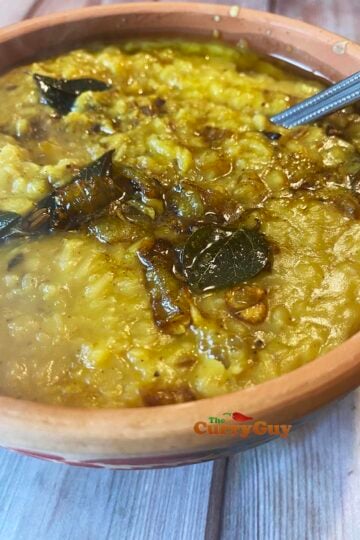


Authentic Lamb Dhansak
This is a delicious and authentic lamb dhansak. You an make it with lamb or mutton. It's really easy. You are going to love this one!
Ingredients
- 70g (1/3 cup) toor dal (pigeon peas), soaked in water for at least one hour
- 70g (1/3 cup) masoor dal (red lentils), soaked in water for at least one hour
- 100g (1/2 cup) chana dal (Bengal gram), soaked in water for at least one hour
- 150g aubergine, chopped
- 200g pumpkin or butternut squash, diced
- 1 small bunch spinach or methi leaves
- 1 medium onion, chopped
- 2 tomatoes, chopped
- 1 tsp turmeric
- Salt, to taste
- FOR THE CURRY
- 70ml (1/4 cup) vegetable oil or ghee
- 750g lamb or mutton (bone-in for best flavour)
- 2 large onions, finely sliced
- 2 tbsp ginger-garlic paste
- 3 tbsp dhansak masala
- 1 to 3 tbsp Kashmiri chilli powder
- 2 tomatoes, chopped
- Handful of fresh coriander, chopped
- Juice of 2 limes
Instructions
- Pour the whole spices into a dry frying pan over a medium heat. Toast the spices until fragrant and warm to the touch and then transfer to a plate to cool some.
- Grind the roasted spices in a spice grinder or pestle and mortar until you have a fine powder. Set aside for
later. - In a heavy pot, combine the dals, butternut squash, aubergine, spinach, onion, tomato, turmeric with about 1 litre (4 cups) water. Cook until everything is soft which will take about 45 minutes. Blend into a smooth puree.
- While the lentils and vegetables are cooking, place another heavy pot over a medium-high heat and add the oil or ghee. When visibly hot, stir in the chopped onions and fry for about 8 minutes or until golden brown.
- Stir in the garlic and ginger paste, chopped tomatoes, 3 tbsp of dhansak masala and more Kashmiri
chilli powder to taste if needed. - Stir in the cubed lamb or mutton and fry for about 4 minutes, stirring continuously so that the meat is coated with the other ingredients in the pan.
- Pour in the dal and vegetable puree and bring to a simmer. Stir well to combine.
- Cover the pot and let it all simmer for about 45 to 60 minutes or until the meat is fall apart tender. Only add more water if the curry is looking dry.
- Season with salt to taste and squeeze lime juice to taste over the curry as well. Serve with brown Basmati
rice.
Recommended Products
As an Amazon Associate and member of other affiliate programs, I earn from qualifying purchases.


Nutrition Information:
Yield:
6Serving Size:
1Amount Per Serving: Calories: 657Total Fat: 40gSaturated Fat: 15gTrans Fat: 0gUnsaturated Fat: 22gCholesterol: 154mgSodium: 539mgCarbohydrates: 31gFiber: 10gSugar: 9gProtein: 46g

larry says
is it possible you have got step 7 wrong? It definitely doesn't need another litre of water. I put it in and it took over three hours to reduce to the correct consistency. Tasted bloody marvelous.
Dan Toombs says
Sorry about that, no water should be added in step 7 unless it’s looking dry.
I will get that changed.
I’m glad you managed to make it taste delicious.
Thanks very much.
Dan
Robin says
Hi, you mentioned tamarind in your conclusion but this isn't mentioned elsewhere in the recipe. If included, details please! Thanks
Dan Toombs says
You can add a few teaspoons of tamarind sauce at the end. If you don’t have any lime juice has the same tangy souring effect.
Thanks
Dan