
Few foods capture the spirit of Southeast Asia quite like sticky rice, known in Thai as Khao Niew. Soft, chewy, fragrant, and slightly sweet, it’s more than just a side dish… it’s the heart of Northern and Northeastern Thai cuisine, a humble grain that binds meals and even generations together.
If you’ve ever enjoyed a plate of spicy larb, grilled chicken, or mango sticky rice, you’ve met this superstar ingredient. But despite its simplicity, making perfect sticky rice at home takes a little technique and a lot of patience.

What Is Sticky Rice?
Sticky rice, also known as glutinous rice or sweet rice, is a special variety of rice that’s particularly high in amylopectin and low in amylose, giving it its characteristic stickiness when cooked. I know that sounds a bit scientific but you science minded people out there will understand.
Despite the name, it contains no gluten. “Glutinous” simply refers to its glue-like texture.
When cooked correctly, sticky rice forms soft, glossy grains that cling together, making it easy to eat with your hands, a defining feature of Northern and Isaan (Northeastern) Thai dining.
Sticky rice differs from jasmine or long-grain rice both in texture and preparation. Unlike regular rice, sticky rice is soaked before steaming, not boiled, which helps preserve its unique chewiness and subtle sweetness.
Ingredients
The beauty of sticky rice lies in its simplicity. You only need Thai Glutinous rice and cold water. That’s it. No salt, no oil, no special flavourings. The magic lies entirely in the method.

See recipe card for quantities.
Step by step photos
There are several ways to cook sticky rice, traditional steaming, electric rice cooker and instant pot, but the bamboo steaming basket remains the gold standard for texture and authenticity. That's what I use.

- Step 1: Place the glutinous rice in a large bowl and rinse under cold water. Swirl gently with your hand, then pour off the cloudy water. Repeat 3–4 times, until the water runs mostly clear. This removes excess starch and prevents gumminess.
- Step 2: Cover the rinsed rice with plenty of cold water and let it soak for at least 6 hours or overnight for best results. This step hydrates the grains evenly, ensuring a chewy yet tender texture once steamed.

- Step 3: After soaking, drain the rice well using a fine sieve or colander.

- Step 4: If using a traditional Thai sticky rice steamer (a woven bamboo basket placed over a conical aluminium pot), fill the bottom pot with water, making sure it doesn’t touch the rice basket. Line the basket with cheesecloth or leave it unlined (traditionalists skip it) and add the drained rice.

- Step 5: Bring the water to a boil over medium heat. Cover and steam the rice for 15 minutes, then flip or toss it gently to redistribute the grains. Steam for another 10–15 minutes, until the rice turns glossy, translucent, and tender.

- Step 6: Once cooked, transfer the rice to a clean bowl or bamboo container. Cover it loosely with a clean cloth and let it rest for 10 minutes before serving. This resting stage helps the grains firm up and develop their signature stickiness.
Alternative Cooking Methods
If you don’t have a traditional bamboo steamer, you can still make great sticky rice with modern kitchen equipment.
1. Using a Regular Steamer
Line your steamer basket with cheesecloth, add soaked and drained rice, and steam for 25–30 minutes over simmering water. Toss halfway through.
2. Using a Rice Cooker
Some rice cookers have a “sticky rice” setting. If not, use the steamer insert:
- Add soaked and drained rice to the steamer basket.
- Fill the bottom of the rice cooker with water (not touching the rice).
- Steam for 30–40 minutes, checking halfway.
3. Using an Instant Pot or Pressure Cooker
Add 1 cup of water to the pot, place soaked rice in a steamer basket, and cook on High Pressure for 12 minutes. Quick-release pressure and fluff before resting.
Useful Equipment
You can make sticky rice with basic tools, but if you plan to do it regularly, a few specialized items make life easier:
Traditional Sticky Rice Steamer Set: Bamboo basket (huad) + aluminium steaming pot.Available at most Asian grocery stores or online.
Cheesecloth or Muslin Cloth: Prevents rice from falling through basket holes and makes cleanup easier.
Kratip (Sticky Rice Basket): A small woven container used to keep cooked rice warm at the table.
Fine Mesh Sieve :For rinsing and draining soaked rice.
Rice Cooker with Steamer Basket (Alternative): Ideal for urban kitchens where traditional steamers might not fit.
Storage and Reheating
Sticky rice is best eaten fresh, but you can store and reheat it with great results if done correctly.
To Store:
- Room Temperature: Keep in a covered container for up to 6 hours.
- Refrigerator: Place cooled rice in an airtight box or wrap tightly in plastic wrap. Keeps for 2–3 days.
- Freezer: Store in portions in freezer bags for up to 2 months.
To Reheat:
Pan Steam Method:
Put rice in a heatproof bowl over simmering water, cover, and steam until warmed through.
Steamer Method (Best):
Place rice in a steamer basket, cover and steam for 10 minutes or until hot and soft again.
Microwave Method:
Sprinkle rice with a tablespoon of water, cover with a damp paper towel and heat for 1–2 minutes.
Top Tip
Always soak your rice.
This is non-negotiable! Skipping the soak will leave you with tough grains.
FAQ
No. Sushi rice is short-grain Japanese rice that becomes sticky when cooked, but it’s not glutinous rice. True sticky rice has a higher starch content and a different texture, more elastic and chewy.
No! While traditional steamers give the best results, any setup that allows steam to circulate around the rice will work, even a metal steamer or a mesh colander over a pot.
Yes, if your rice cooker has a steam tray or sticky rice setting. It may take longer, but results are close to traditional.
Yes! The term “glutinous” refers to its gluey texture, not gluten content. It’s safe for gluten-free diets.
Line a small basket or bowl with a clean damp cloth, place the cooked rice inside and cover with another cloth or lid. This traps steam and prevents drying out for up to 2 hours.
Pairing
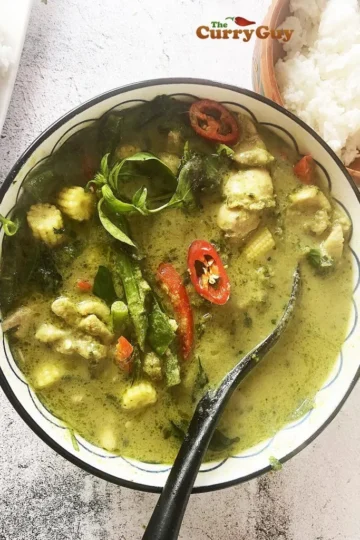
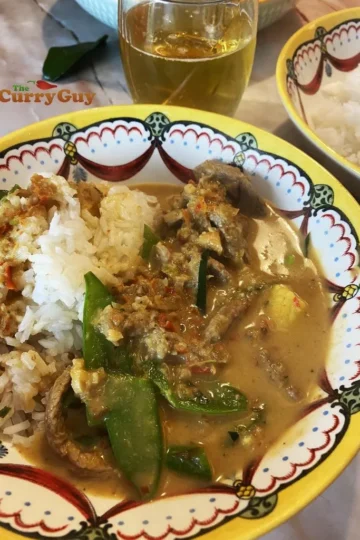
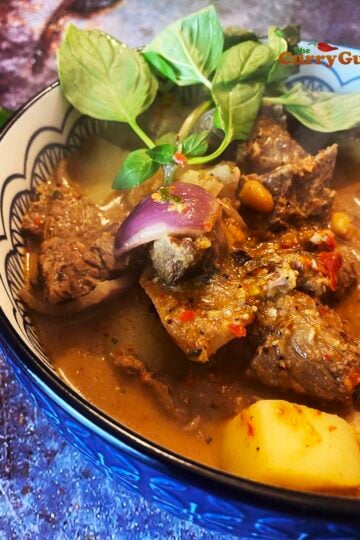
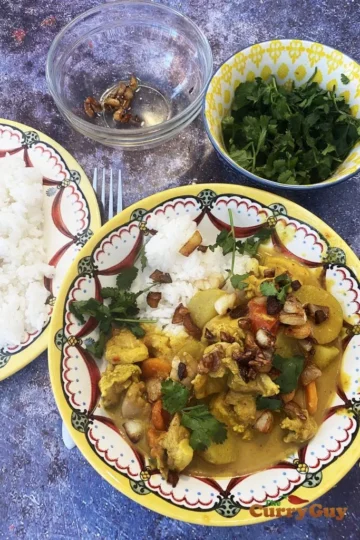
You will love sticky rice with any of these popular Thai dishes!

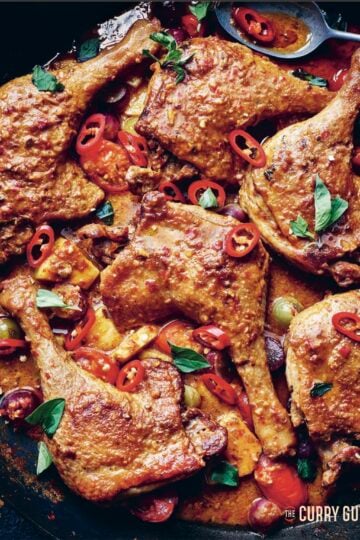
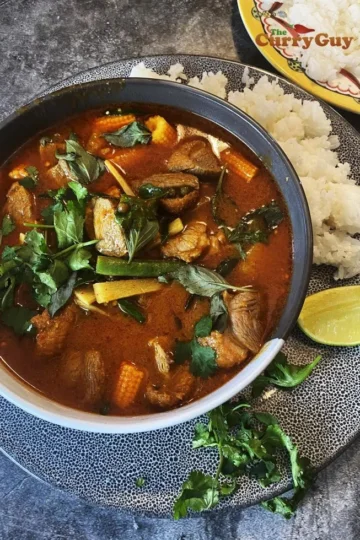

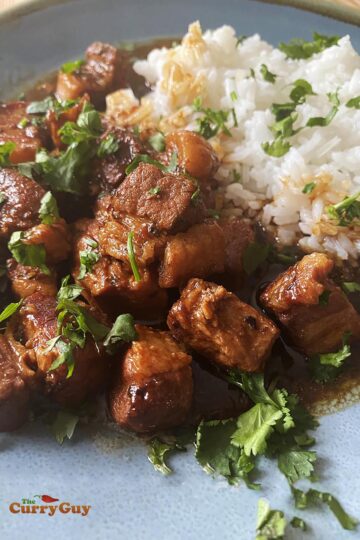
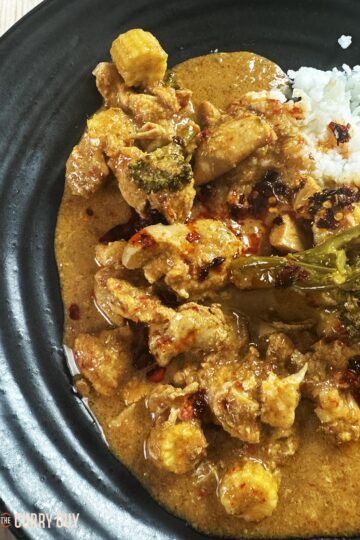

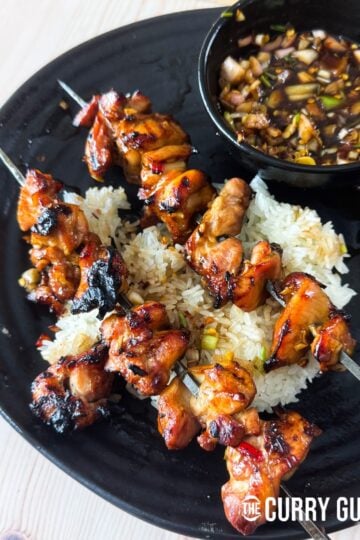
Have you tried this sticky rice recipe?
If yes, please give it a star rating in the recipe card below and leave a comment. I love receiving your feedback and I’m sure other readers of my blog do too. Thank you.
If you are not already doing so, please follow The Curry Guy on Instagram and Facebook for all our latest recipes.
Sticky Rice
Ingredients
- 675g (3 cups) Thai glutinous rice
Instructions
- Pour the rice into a bowl and cover with water. Swirl the rice around in the water with your hand. The water will become milky white from the starch. Drain and repeat this process until the water runs almost clear.
- Now cover the cleaned rice with about twice the volume of clean water and soak for 6 hours or overnight. It is important to cover with a lot of water as the rice will double in size as it soaks.
- When ready to steam, place your steamer over a saucepan of boiling water and steam, covered, for 15 minutes. Check it – it should be sticky, fragrant and mouthwateringly delicious. You can cook it longer, as I do but 15 minutes usually suffices when served as a side dish. The longer you steam the sticky rice, the softer and stickier it will become.
Notes
It is important to use Thai glutinous rice but please don’t mistake the word glutinous with glutenous. The word glutinous refers to the starch that is on the rice grains, rather than suggesting there is gluten in it (this would be glutenous). All rice is gluten-free.
Recommended Products
As an Amazon Associate and member of other affiliate programs, I earn from qualifying purchases.


Nutrition Information:
Yield:
4Serving Size:
1Amount Per Serving: Calories: 42Total Fat: 0gSaturated Fat: 0gTrans Fat: 0gUnsaturated Fat: 0gCholesterol: 0mgSodium: 2mgCarbohydrates: 9gFiber: 0gSugar: 0gProtein: 1g


Leave a Reply