
One of my favourite things to order in a Bento box is Japanese Pork Katsu or Tonkatsu. When cooked correctly, it has a perfectly crispy, golden crust and juicy, tender pork inside. Tonkatsu is one of Japan’s most beloved dishes, both in restaurants and home kitchens alike.
Whether served with shredded cabbage, a drizzle of sweet-savory tonkatsu sauce or alongside a bowl of steaming rice, this dish offers the kind of satisfying crunch and flavour that keeps you coming back for more. Today, I’m going to show you how to make delicious tonkatsu at home.

What Is Katsu?
In Japanese, “katsu” is short for katsuretsu which itself is derived from the English word “cutlet.”
So, katsu refers to a breaded and fried cutlet, most often made with pork (tonkatsu), chicken (chicken katsu) or sometimes seafood (ebi katsu for shrimp).
The defining feature of katsu is its crunchy panko breadcrumb coating that’s light, airy, and crisp and envelops a juicy, seasoned cutlet of meat. It’s often sliced into strips and typically served with tangy-sweet tonkatsu sauce, finely shredded cabbage, steamed rice, and miso soup. I like to serve my tonkatsu whole but you can and should slice yours into strips if you prefer.
So while “katsu” simply means “cutlet,” tonkatsu specifically refers to pork katsu and it’s arguably the most iconic version of all.
A Brief History of Tonkatsu
Tonkatsu has an interesting history that reflects Japan’s culinary adaptation of Western influences.
Western Inspiration
During Japan’s Meiji Era (1868–1912), the country underwent a period of rapid modernization and began to embrace Western culture and cuisine. Fried meat dishes, such as European pork cutlets (côtelette de porc), were introduced by French and British influences in the late 19th century.
Initially, these dishes were served in yōshoku (Western-style Japanese restaurants), often prepared with beef and cooked in butter but over time, Japanese chefs adapted the recipe to local tastes.
The Birth of Tonkatsu
In 1899, a Tokyo restaurant called Rengatei is credited with creating the first tonkatsu. Instead of beef, the chef used pork, coated it in breadcrumbs (panko) and deep-fried it in vegetable oil instead of meat dripping as was used in Europe at the time.
This new dish was an instant success and soon spread across Japan. By the mid-20th century, Tonkatsu had become a national favourite, often enjoyed as both a casual home meal and a restaurant specialty.
Tonkatsu Today
Today, Tonkatsu is a Japanese comfort food classic. It’s served in dedicated tonkatsu restaurants, often as part of a teishoku (set meal) that includes rice, miso soup, cabbage, tonkatsu sauce and pickles. It’s also a common feature in bento boxes, sandwiches (katsu sando), and curry dishes like the sauce used in this Chicken Katsu Curry.
Tonkatsu is also a popular substitute for the chicken and beef in Japanese Chicken Curry and Japanese Beef Curry.
Ingredients
There aren't a lot of ingredients in tonkatsu. Get them measured out and ready before you start cooking. You will find the exact measures I use in the printable recipe card at the bottom of this page. These are the ingredients you need for the crispy coating which can be used to cook chicken and prawns (shrimp) too.

See recipe card for quantities.
- Pork loin or pork fillet chops
- Salt
- Black pepper
- Plain flour
- Eggs
- Japanese panko breadcrumbs
- Vegetable oil
Step by step photos
Check out my step by step photos to see just how easy it is to make restaurant quality tonkatsu at home. The ingredient measurements are in the printable recipe card at the bottom of this page.

- Step 1: Trim any excess fat or sinew from the pork cutlets. Using the back of a knife or a meat mallet, gently pound the pork to about 1–1.5 cm thickness for even cooking.

- Step 2: Combine the salt, pepper and flour and then dredge each pork cutlet lightly in flour, shaking off any excess.

- Step 3: Dip into the beaten egg to coat evenly.

- Step 4: Then press firmly into the panko breadcrumbs until completely covered.

- Step 5: Heat the oil to 170–175°C (340–350°F), the sweet spot for crispy golden tonkatsu. Add one of the tonkotsus.

- Step 6: Cook for 3–4 minutes per side for thin cuts, or 5–6 minutes per side for thicker ones. Flip once halfway through, until both sides are golden brown and crisp. For very thick cuts, finish cooking in a preheated 180°C (350°F) oven for 5–7 minutes.

- Step 7: Slice into strips or serve your tonkatsu whole. This is so good drizzled with tonkatsu sauce and served with Japanese coleslaw. I have a Japanese coleslaw recipe on my site but this time I simply mixed some shredded cabbage with Japanese salad dressing. Boiled Basmati or Jasmine rice are also a nice addition.
Tonkatsu Variations to Try
- Chicken Katsu (Torikatsu) – Made with chicken breast instead of pork.
- Menchi Katsu – Ground meat (beef/pork mix) shaped into patties and fried.
- Katsu Sando – Tonkatsu served between slices of soft white bread with sauce.
- Katsu Curry – Sliced tonkatsu served with Japanese curry and rice.
- Cheese Katsu – Pork cutlet filled with cheese before frying for a molten centre.
Useful Equipment
While you don’t need much to make Tonkatsu, a few tools make it easier and more authentic:
- Meat mallet or rolling pin – To flatten the pork evenly.
- Wire rack – To rest breaded and fried pork without getting soggy.
- Deep frying thermometer – Essential for controlling oil temperature. See FAQ for alternative.
- Tongs or cooking chopsticks – For safe handling during frying.
- Sharp chef’s knife – For slicing cleanly after cooking.
- Heavy-bottomed frying pan or wok – To maintain steady heat.
Storage and Reheating
Tonkatsu tastes best fresh but you can store leftovers safely.
Storage:
- Allow the cutlets to cool completely.
- Store in an airtight container in the refrigerator for up to 2 days.
- You can also freeze Tonkatsu (before or after frying):
- Before frying: Freeze breaded cutlets on a tray, then store in a freezer bag for up to 1 month.
- After frying: Let cool, then wrap each cutlet individually and freeze for up to 2 months.
Reheating:
- Oven method (best): Preheat to 180°C (350°F). Reheat Tonkatsu on a wire rack for 8–10 minutes, flipping once.
- Air fryer: 180°C (350°F) for 6–8 minutes for crisp results.
- Avoid microwaving: It softens the coating and makes it soggy.
Tip: If reheating from frozen, bake directly from frozen. DO NT THAW to maintain crispness.
Top Tip
Use the right cut of pork! Loin or fillet are traditional. Loin has more fat and is juicier; fillet is leaner and tender.
FAQ
No problem! Add a pea sized piece of the pork to the hot oil. It should sizzle and rise to the top in about 5 seconds when the oil is ready.
The main difference is the protein. Tonkatsu uses pork; Chicken Katsu uses chicken breast or thigh. The coating and frying method are the same.
Yes! Place breaded cutlets on a wire rack over a baking tray. Spray with oil and bake at 200°C (400°F) for 20–25 minutes, flipping halfway. It won’t be quite as crispy as fried, but still delicious and healthier.
Use gluten-free panko breadcrumbs, rice flour instead of wheat flour, and tamari instead of soy sauce for the tonkatsu sauce, if serving.
Absolutely. I do this often to cut back on the fat of oil. Air fry at 190°C (375°F) for 10–12 minutes, flipping halfway. Lightly spray both sides with oil for even crisping.
You can reuse oil once or twice if it hasn’t burned. Strain through a fine sieve once cooled and store in a sealed container in a cool, dark place. Discard if it smells rancid or darkens significantly.
Related
Tonkatsu sauce, Japanese coleslaw and rice are all served with tonkatsu. You might also like to make a coleslaw with my special Japanese dressing recipe.


Want to try more Japanese Recipes?
Here are a few I think you might already know and love:


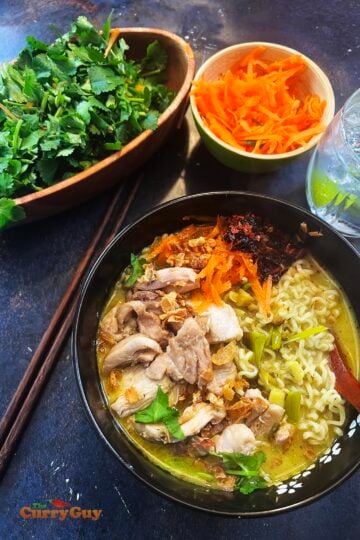
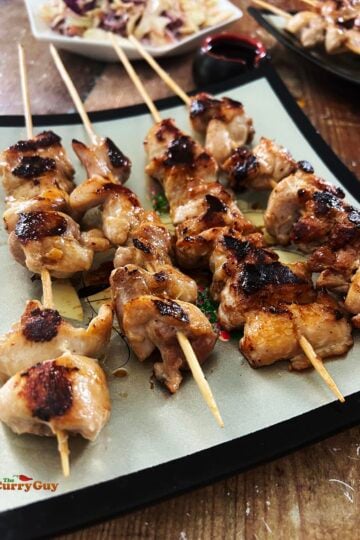

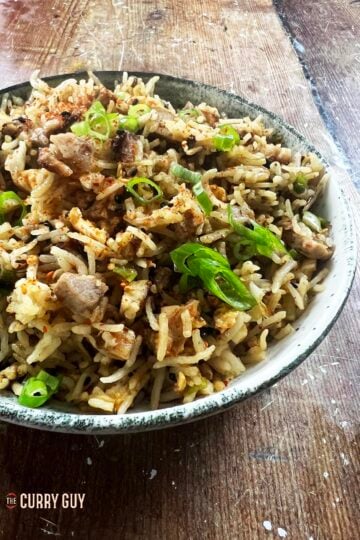
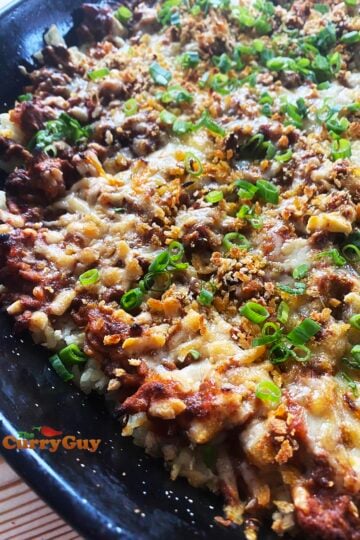
Have you tried this tonkatsu recipe?
If yes, please give it a star rating in the recipe card below and leave a comment. I love receiving your feedback and I’m sure other readers of my blog do too. Thank you.
If you are not already doing so, please follow The Curry Guy on Instagram and Facebook for all of my latest recipes and news.
Tonkatsu
Ingredients
- 4 boneless pork loin or pork fillet chops (about 150–180g each)
- 1 tsp salt
- 1 tsp black pepper
- 1 cup (120g) plain flour
- 2 large eggs, beaten
- 1½ cups (90g) Japanese panko breadcrumbs
- Vegetable oil, for frying (about 3–4 cups for deep or shallow frying)
Instructions
- Trim any excess fat or sinew from the pork cutlets.
- Using the back of a knife or a meat mallet, gently pound the pork to about 1–1.5 cm thickness for even cooking.
- Set up three shallow bowls or plates: one for the flour, one for the beaten eggs and another for the bread crumbs.
- Dredge each pork cutlet lightly in flour, shaking off any excess. Dip into the beaten egg to coat evenly. Then press firmly into the panko breadcrumbs until completely covered.
- Place the breaded pork cutlets on a wire rack for 10–15 minutes before frying. This allows the coating to adhere properly, preventing it from falling off during cooking.
- Pour vegetable oil into a deep frying pan or wok to a depth of about 2–3 cm (1 inch) for shallow frying.
Heat the oil to 170–175°C (340–350°F), the sweet spot for crispy golden tonkatsu. - Fry one or two cutlets at a time (don’t overcrowd the pan). Cook for 3–4 minutes per side for thin cuts, or 5–6 minutes per side for thicker ones.
- Flip once halfway through, until both sides are golden brown and crisp. For very thick cuts, finish cooking in a preheated 180°C (350°F) oven for 5–7 minutes.
- Serve with tonkatsu sauce, shredded cabbage, steamed rice and/or miso soup for a complete meal.
Recommended Products
As an Amazon Associate and member of other affiliate programs, I earn from qualifying purchases.


Nutrition Information:
Yield:
4Serving Size:
1Amount Per Serving: Calories: 536Total Fat: 17gSaturated Fat: 5gTrans Fat: 0gUnsaturated Fat: 10gCholesterol: 177mgSodium: 965mgCarbohydrates: 54gFiber: 3gSugar: 3gProtein: 40g


Leave a Reply